
Offgrid Solar Inverter and Panel
Offgrid Solar Inverter and Panel
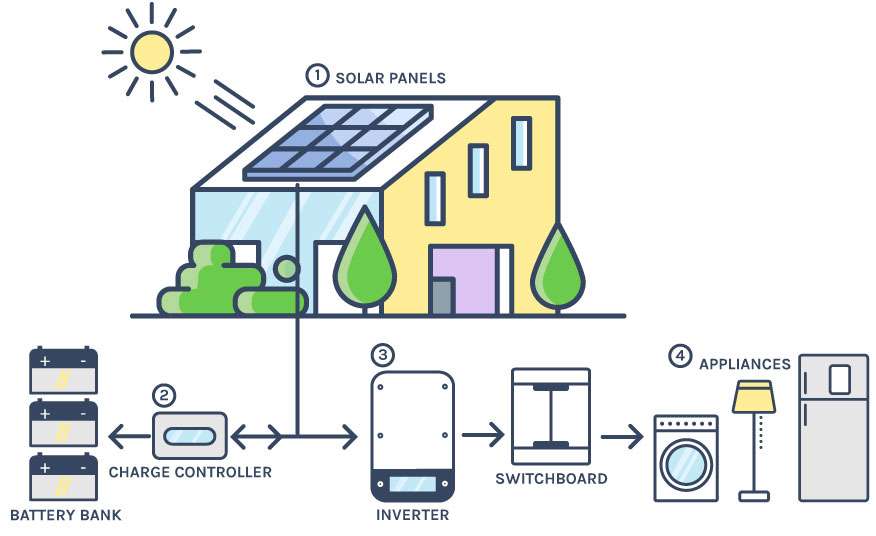
An off-grid solar power system for home is a self-sufficient energy solution that allows households to produce and use electricity without depending on the main power grid. This system is especially beneficial in rural or remote areas where grid connectivity is limited or unreliable. With increasing awareness about renewable energy and rising electricity costs, off-grid solar systems are becoming a popular choice for sustainable living.
An off-grid solar power system consists of several key components. Solar panels are installed on rooftops or open spaces to capture sunlight and convert it into electrical energy. A charge controller manages the power flowing from the panels to the batteries, preventing overcharging and damage. Batteries play a crucial role by storing excess energy generated during the day for use at night or during cloudy periods. An inverter then converts the stored direct current (DC) into alternating current (AC), which is used to operate household appliances.
One of the major advantages of an off-grid solar power system is energy independence. Homeowners are not affected by power outages or electricity shortages. It also offers long-term financial benefits, as it reduces or completely eliminates monthly electricity bills. Moreover, solar energy is clean and environmentally friendly, producing no harmful emissions and reducing dependence on fossil fuels.
Despite its benefits, an off-grid solar system requires careful planning. The initial installation cost can be high due to the need for batteries and other equipment. The system must be properly sized based on the household’s energy consumption to ensure a consistent power supply. Regular maintenance, especially of batteries, is necessary to maintain efficiency and system longevity.
In conclusion, an off-grid solar power system for home is an effective and eco-friendly solution for achieving energy independence. While the upfront investment may be significant, the long-term savings, reliability, and environmental advantages make it a worthwhile option for homeowners seeking a sustainable future.